
IT, e-commerce firms to raise the bar in recruitment, packages.

Don't hit the buy button as soon as you hear of the next BIG online sale this Diwali. Here are some very important lessons -- in the light of how some online shoppers felt cheated after Flipkart's 'Billion Day Sale' -- that could save you time, money and peace of mind, says Rajiv Raj!

Their startup investments number 13 so far, compared to 17 deals in 2020.

Udaan - India's largest business-to-business (B2B) e-commerce company - has laid off about 180 employees, or 4-5 per cent of its workforce of 4,000, in a move to drive cost efficiency, revealed sources. They said the layoffs have happened across various department functions. The layoffs have happened at a time when the Bengaluru-based firm is trying to turn into a publicly listed entity in 18-24 months.

The CAIT has complained to the Commerce Ministry to take action against these companies.

Internet retailer Amazon and its fast-growing local rivals are driving a boom in commercial property leasing in India.

The writing has been on the wall for some time and it showed up prominently during the festival-season sales last year, when Meesho toppled Amazon to become the second-largest player in order share. During the sales season, 60 per cent of the orders Meesho received were from tier-4 cities and beyond. According to a report by consulting firm Redseer, festival-season sales last year were driven primarily by tier-2 and tier-3 cities, with 64 per cent of the shoppers coming from those.

Mobile phones, televisions, refrigerators, laptops and stationary items will be allowed to be sold through e-commerce platforms like Amazon, Flipkart and Snapdeal from April 20 during the lockdown, officials said on Thursday. The clarification from a senior home ministry official came a day after Union home secretary Ajay Bhalla issued revised guidelines for the extended lockdown period till May 3.


Tax collection at source would lock in Rs 400 crore of seller money, say Flipkart, Amazon, Snapdeal.

Global investment management firm Bernstein has pegged the enterprise valuation of Reliance Industries (RIL)'s 85 per cent stake in Reliance Retail at $111 billion, while valuing the Mukesh Ambani-led company's 66.5 per cent stake in telecom and digital platform arm Reliance Jio at $88 billion. Reliance Industries had earlier planned to list both its subsidiaries to unlock value for its shareholders but hadn't fixed any timeline. The report said that Reliance Retail had raised $6 billion by diluting a 10.1 per cent stake, while Jio Platforms raised $20 billion from investors by selling 33 per cent in 2020.

Shivani Shinde reports. The youngest member of the Tata group, the much-awaited Tata Neu, has finally been launched for people across the country. The 'super app' offers a number of services ranging from financial services to tech, travel and even groceries. The app takes off with a customer base of 120 million, with 2,500 offline stores. According to the Tata group, the app will be a one-stop destination for all consumer needs. The super app also offers a bouquet of financial offers like Unified Payments Interface (UPI), bill payments, loans and insurance. Tata Neu will also provide other services like fashion, gadgets, groceries, travel and health.

Analysts say consumers would be the real winners.

Accuses foreign-funded competition of 'capital dumping' to capture market, bats for stronger regulations for sector.

SoftBank-based e-commerce marketplace Snapdeal has deferred its Rs 1,250 crore IPO, joining the list of startups that have decided to shelve their initial public offering (IPO) plans this year. Snapdeal, which competes with Amazon and Flipkart, filed a request this week with the Securities and Exchange Board of India (Sebi) to withdraw its draft red herring prospectus (DRHP) amid a sell-off in tech stocks worldwide. "Considering the prevailing market conditions, the company has decided to withdraw the DRHP. The company may reconsider an IPO in the future, depending on its need for growth capital and market conditions," a Snapdeal spokesperson said.
The spurt in online sales during the festival season is expected.

Instead of making the sellers bleed, experts say, e-commerce giants Amazon and Flipkart have roped in banks to offer discounts to buyers.

'The competition between the two is definitely going to be of great interest to the Indian market.'

From 690,800 sq ft in 2013, the absorption by e-commerce companies in Chennai dropped to 31,150 sq ft last year.

The proposed policy is increasingly becoming an item of negotiation, as the US pushes hard to change India's stance.

Several exchanges are facing a cash crunch with committed investment not coming from venture capital funds and trading activity seeing a sharp decline, reports Rajesh Bhayani.

It all started with Flipkart and Amazon trying to outdo each other - after Flipkart announced $1-billion fund-raising in July.
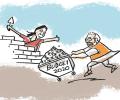
Apart from making your purchases on these platforms expensive, it will also mean sellers will have to face the brunt of reduced cash flows amid already low margins for some. Experts said the proposal, which will take effect on April 1, 2020, and will be inserted as a new section in the Income Tax Act, is expected to affect the working capital of e-commerce companies and reduce cash flows for e-sellers.

As many as 81 per cent people support having rules for consumer e-commerce, but want more services-based platforms to have more clearly defined roles, a survey by community social media platform LocalCircles has found. The survey asked respondents to answer questions based on the recent draft Rules proposed by the ministry of consumer affairs. The responses found 81 per cent consumers wanting sales of products and services over electronic or digital networks to be governed by a set of electronic commerce rules.

Similar discounts compared to online led to a spike in demand for offline, where customers can get a more personal and hands-on product experience.

US major lost its first mover advantage, now wants to secure its investments in the country.
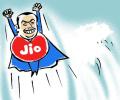
Billionaire Mukesh Ambani's Reliance Jio is India's strongest telecom brand in India, ahead of Bharti Airtel and Vodafone Idea Ltd, according to brand intelligence and data insights company TRA. TRA, formerly Trust Research Advisory, in its 'India's Most Desired Brands 2022' ranked companies according to their brand strength. Reliance Jio topped the telecom category, followed by Bharti Airtel, Vodafone Idea Ltd and BSNL.

Finance Minister Nirmala Sitharaman on Tuesday met top officials of the finance and corporate affairs ministries to review the implementation of various announcements of the Union Budget FY24. "The finance minister underlined the importance of continuous assessment of progress to ensure that various announcements are implemented in a time-bound manner," the finance ministry said in a tweet. Sitharaman also discussed in detail various issues on the digital competition laws with Rajeev Chandrashekhar, the minister of state for entrepreneurship, skill development, electronics and technology.

Going ahead with its festive sales as per schedule, companies such as Flipkart, Jabong, and Myntra are having week-long Valentines' Day sales, offering discounts of as much as 80 per cent. Amazon India is also offering discounts of almost 40 per cent.

Flipkart, Amazon & Paytm have raised commissions from sellers.

Amid the protests against leading e-commerce firms, Flipkart and Amazon, shipments through the online route in fact witnessed a double-digit growth every quarter.

The Delhi high court on Wednesday asked the Centre and the Delhi government to present their stand on a plea seeking recall of all currency notes above Rs 100, restricting cash transactions above Rs 10,000 and linking assets worth more than Rs 50,000 with Aadhaar to check corruption.

For someone who is such an indefatigable litigant, what is stopping Mr Saxena from using the law to depose Mr Kejriwal? Maybe we will get the answer after May 25, notes Aditi Phadnis.

'Merchandise plays a key role in creating buzz about a specific party.'

As the world celebrated International Day of Persons with Disabilities (PwD) on December 3, corporate India has kept up with efforts to make workplaces more inclusive and accessible. Organisations across sectors are taking initiatives such as equipping offices with practical work tools like Braille-friendly and voice-enabled lifts and screen readers. While inclusion has gained pace, only 11.3 per cent (or 3.4 million out of 30 million) Indians with disabilities have jobs.

'We want to achieve overall profitability, and then we would go for an IPO.'

Many industry executives have said the draft e-commerce policy is being perceived as nationalistic but not overly protectionist and it is providing preference to Indian players against foreign companies. This might have an impact on investment by large players such as Walmart and Amazon in the country, said the executives. They said e-commerce was a very small portion of the retail industry and at a nascent stage and did not require heavy hammer regulations. Though the policy talks about being equally applicable to foreign and domestic players, it mentions that foreign direct investment (FDI) takes precedence over the e-commerce policy in any area of overlap.

The Indian retail segment has its own uniqueness and the country is one of the most exciting markets globally that is poised to grow to over a trillion dollars by 2025, according to Walmart Inc President and CEO Doug McMillon. Speaking at the Converge@Walmart event, McMillon noted that given the diversity of the Indian market, the company has to "think local and execute locally". "India is such a diverse market, it's not one country in some ways and so we have to think local and execute locally, and it has its own rules, and so, we've got to comply with those rules," he said.

The delivery staff who drop off packages for online retail giants or food or ferry passengers around the city in their taxis are among the worst affected by the capital's foul air.

The market, however, reacted negatively to SpiceJet's announcement and the company's stock dropped by 0.87 per cent as analysts became wary of diversion into a new business during a high fuel price environment.
